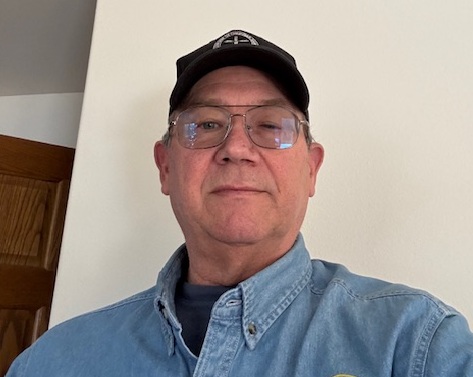
When Farming Skills Become Ministry Opportunities – by Scott Fischer
Farmers are used to hard work, solving problems, adapting to unexpected situations, and getting things done. According to Scott Fischer, those same qualities can make farmers uniquely equipped for ministry.
During the 2026 FCFI Conference, Fischer shared from his experience as a retired dairy, hog, and crop farmer from southern Wisconsin. After farming for years, he transitioned into agricultural research and eventually became involved with the Fellowship of Christian Farmers International.
His journey into ministry began after attending an FCFI conference in Dubuque. What started as curiosity eventually became a new season of serving God.
After attending the conference, Fischer told his wife, Bev, that he planned to retire. Since then, he and Bev have continued looking for ways to serve through what Fischer describes as “kingdom work.”
Farmers Know How to Get Things Done
Fischer believes farmers have qualities that can translate naturally into ministry.
Farmers are busy people, but they are also accustomed to working independently, solving problems, and taking responsibility. He shared how youth camps have appreciated having farmers volunteer because they can simply be given a task and trusted to get it done.
Farmers also tend to be skilled in many different areas. From plumbing and electrical work to repairing equipment, fixing fences, and building structures, agricultural life often requires people to become jacks of all trades.
Fischer believes those practical skills can become valuable tools for serving churches, camps, communities, and ministries.
Thinking Outside the Box
Farmers are also accustomed to finding creative solutions when things don’t go according to plan.
Fischer shared a humorous story from his time as a volunteer firefighter. During a training session, the instructor asked what they would do if the battery on a defibrillator was dead. The group of farmers immediately started thinking of alternative solutions.
The story illustrated a broader point: farmers are used to making things work with what they have.
That kind of creativity can be useful in ministry, especially when resources are limited or unexpected challenges arise.
Overcoming Time, Fear, and Lack of Motivation
While farmers have many qualities that can benefit ministry, Fischer acknowledged that there are also obstacles.
Time is one of them. Planting and harvest seasons can consume nearly every available hour, making it difficult to commit to ministry activities.
But Fischer believes fear can be an even greater barrier.
People may be afraid of rejection, making mistakes, being laughed at, or simply not knowing what to say or do. Those fears can prevent people from taking the first step.
He encouraged farmers not to allow fear of failure to keep them from serving.
Farmers are already familiar with learning through experience. Equipment sometimes has to be taken apart more than once before it is fixed correctly. Ministry can be similar. Not every attempt will go perfectly, but that should not stop someone from trying.
Finding the Motivation to Serve
Fischer also spoke about motivation.
He used the example of a farmer who will walk a long distance through a muddy field to attend an auction and bid on something he really wants, yet may spend considerable time driving around a store parking lot looking for the closest parking space.
The difference is motivation.
When something matters deeply to us, we are often willing to make sacrifices to pursue it.
Fischer challenged Christians to consider whether their relationship with Jesus Christ carries that same level of importance.
He emphasized that following Christ should not be limited to Sundays. Faith should influence the way Christians live, work, serve, and interact with others every day.
Every Farmer Has a Unique Gift
Just as every farm has its own way of doing things, Fischer said every person has different gifts and abilities.
Rather than expecting everyone to serve in exactly the same way, churches and ministries can look for individual strengths and find meaningful ways for people to use them.
Fischer pointed to younger people as an example. Young farmers and families may already be busy, but they can still contribute when opportunities are created that fit their abilities and interests.
The goal is to find where people can serve and then give them an opportunity to do it.
Serving Through Practical Ministry
Fischer shared several examples of how the Wisconsin FCFI group has turned practical skills and agricultural connections into ministry opportunities.
One example is a potato ministry connected to agricultural research. Through Fischer’s connections with the University of Wisconsin agricultural research program, potatoes from research check rows are donated to the ministry.
Volunteers package the potatoes into three- to five-pound bags and distribute them to local food pantries.
The ministry gives people of all ages an opportunity to participate, including children.
For Fischer, it is a simple example of how something that might otherwise go unused can become a blessing to others.
Responding to Disasters
Disaster relief is another area where farmers can use their skills to serve.
Fischer described a period in Wisconsin when the region experienced a major snowstorm, tornado, and ice storm within just a few weeks.
FCFI volunteers helped clean up damaged sheds and homes and assisted a Bible camp where trees had been severely damaged by ice.
These opportunities did not necessarily require volunteers to travel across the country. They were opportunities to serve people in their own communities.
Helping Christian Camps
Fischer also encouraged farmers to consider serving Christian camps.
Many camps have ongoing maintenance and repair needs, creating opportunities for people with agricultural and construction skills to contribute.
Farmers can help repair buildings, maintain facilities, and complete practical projects that allow camp staff to focus on ministry.
Even when someone cannot serve directly in a ministry’s primary activities, they can still support those who are doing the work.
Keep Your Eyes Open
Fischer’s encouragement was simple: pay attention to the opportunities God places around you.
He encouraged Christians to keep their prayer lives active and ask God to show them how they can be used in their communities.
Those opportunities may come through FCFI, a local church, a food pantry, a disaster response, a Christian camp, or simply a neighbor who needs help.
Ministry does not always require a platform or a formal position. Sometimes it looks like repairing something, delivering food, cleaning up after a storm, encouraging another volunteer, or simply being willing to serve.
Farmers already possess many of the qualities needed for this kind of work. The challenge is to recognize those abilities as opportunities to serve God and others.
As Fischer reminded the FCFI audience, Christians can use their skills, resources, relationships, and experiences to make a meaningful difference wherever God has placed them.