The Pastor’s Piece – Pastor Kevin Cernek, FCFI Chaplain
FCFI
March 22, 2026
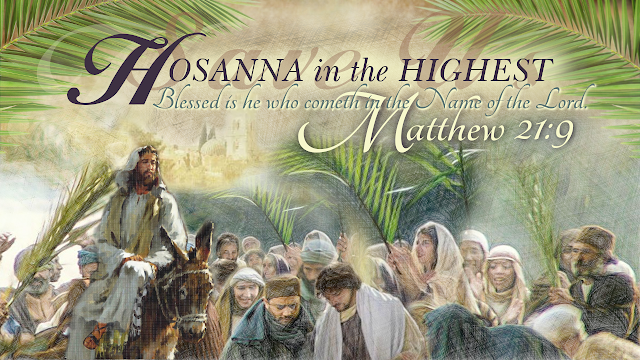
This Sunday is what we call Palm Sunday. That’s the day that Jesus rode on the back of a donkey colt into the city of Jerusalem while the people waved palm branches and shouted, “Hosana in the Highest!” This was five days before His crucifixion. Here’s a little extra insight into that event.
Mark 11:1-6 says: “As they approached Jerusalem and came to Bethphage and Bethany at the Mount of Olives, Jesus sent two of His disciples, saying to them, “Go to the village ahead of you, and just as you enter it, you will find a colt tied there, which no one has ever ridden. Untie it and bring it here. If anyone asks you, ‘Why are you doing this?’ say, ‘The Lord needs it and will send it back here shortly.’” They went and found a colt outside in the street, tied at a doorway. As they untied it, some people standing there asked, “What are you doing, untying that colt?” They answered as Jesus had told them to, and the people let them go. “
Jesus knew the exact events of this day were going to happen – and He knew they would happen on this exact day. In the book of Zechariah, in Chapter 9, Zechariah described what this would be like when he said: “Rejoice greatly … See, your king comes to you, righteous and victorious, lowly and riding on a donkey, on a colt, the foal of a donkey,” (Zechariah 9:9).
Also, the book of Daniel tells us that almost five hundred years earlier, an angel had appeared to the prophet Daniel and had told him that a certain amount of time had been marked out by God, and would be given over to the fulfillment of certain climactic and dramatic events which concerned the people of Israel. And the time when this was to begin was clearly given. It would be when the Persian king, Artaxerxes, issued an edict for the rebuilding of the walls of Jerusalem. You will find that edict recorded in the pages of Scripture in Chapter 2 of the book of Nehemiah. Daniel was told that when the edict was given it would be four hundred eighty-three years from that moment that the Messiah would arrive in Jerusalem.
Bible scholars have analyzed the book of Daniel and have been able to determine the exact date when that decree of Artaxerxes was issued: March 28, 445 B.C. Counting from that date, and making the necessary corrections for calendar differences, it was determined that on April 6, A.D. 32, Jesus rode into Jerusalem – exactly four hundred eighty-three years later. This was the fulfillment of the predictions of Zechariah and Daniel.
As Jesus approached Jerusalem, the crowds of people shouted, “Hosanna! Blessed is He who comes in the name of the Lord!” (Mark 11:9). But the religious rulers refused to receive Him. Luke tells us that as He approached the city, the Pharisees asked Jesus to rebuke His disciples and to make them stop with their shouts of praise and worship. They did not believe Jesus was the Messiah. To this, Jesus responded that if He commanded the people to stop with their exaltation, the stones would immediately begin to praise Him. “‘I tell you,”’He replied, ‘if they keep quiet, the stones will cry out,’” (Luke 19:40). This was all prophesied 1,000 years earlier in Psalm 118.
As He rode down the mountain, Jesus wept because they, “did not recognize the time of God’s coming to (them),” (Luke 19:44). That is one of the most tragic sentences in the Bible. God had sent out invitations to this great event 483 years before, had told when it would happen, had given an exact time schedule, He had told how to recognize the King. But when He came, they praised Him at first, but by the end of the week they were shouting: “Crucify Him. Crucify Him!” What an ironic twist! Yet that is often what happens with us. We do not know the time when God is suddenly in our midst.
Jesus was on His way to the cross. The cross is the symbol of death. In Roman times, the man who took up his cross was not coming back – his life was over. The cross spared nothing. It ended everything completely.
But with Jesus, death was not the end. He said that a grain of wheat must fall into the ground and die, and if it dies, it bears much fruit. There is a life in us that must end, a self-centered life that seeks its own way, its own glory. That life must die. Only then can a new life begin: a life marked by peace, joy, and a deep sense of purpose in who God made us to be.
We cannot skip this process. Many want the life of Christ without the death of self, but Jesus made it clear: “If anyone would follow me, he must deny himself, take up his cross daily, and follow me.”
What does that mean for us? First, it means a once-for-all surrender – laying down our claim to rule our own lives and yielding to Jesus as Lord. It is a recognition that your life is not your own. The key words of the Christian faith are, “You are not your own, you are bought with a price,” (1 Corinthians 19-20). Actually, you never were your own. That is an illusion that the world is perpetrating upon us. They tell us that we belong to ourselves, that we have a right to ourselves. That is a lie. It’s not true. It never was. “You are not your own; you are bought with a price.”
Second, it means a daily choice to follow Him: to turn from what is wrong, to do what is right, and to rely on His strength rather than our own.
This is where the spiritual reality becomes personal: the cross is not just something Jesus carried, it is something we must embrace. Every day presents a choice: will I live for myself, or will I die to myself and live for Christ?
When we choose the cross, we discover it leads to life. As we surrender, we discover new power to obey, new peace that steadies us, and a new capacity to love. In losing our life, we finally find it.