FCFI Raises Concerns Over Faith Restrictions at FFA Conventions
The Fellowship of Christian Farmers International (FCFI) is raising concerns about restrictions that have prevented the organization from exhibiting at several Future Farmers of America (FFA) conventions. FCFI believes these restrictions limit opportunities for students to learn about its faith-based service and volunteer programs.
In a recent interview on Life and Faith Indiana, FCFI Executive Director Dan Janzen discussed the organization’s history with the FFA, its efforts to resolve the issue, and the importance of allowing faith-based conversations alongside agricultural education and service.
A Mission Rooted in Faith and Service
Founded in 1985, FCFI began during a difficult period for American farmers, when low commodity prices placed significant financial pressure on farming families. The challenges of potentially losing farms that had been passed down through generations brought emotional hardship to many farming communities.
Recognizing the need for support and fellowship, the organization’s founders sought to help farmers navigate these difficult circumstances while reminding them that they did not have to face their struggles alone.
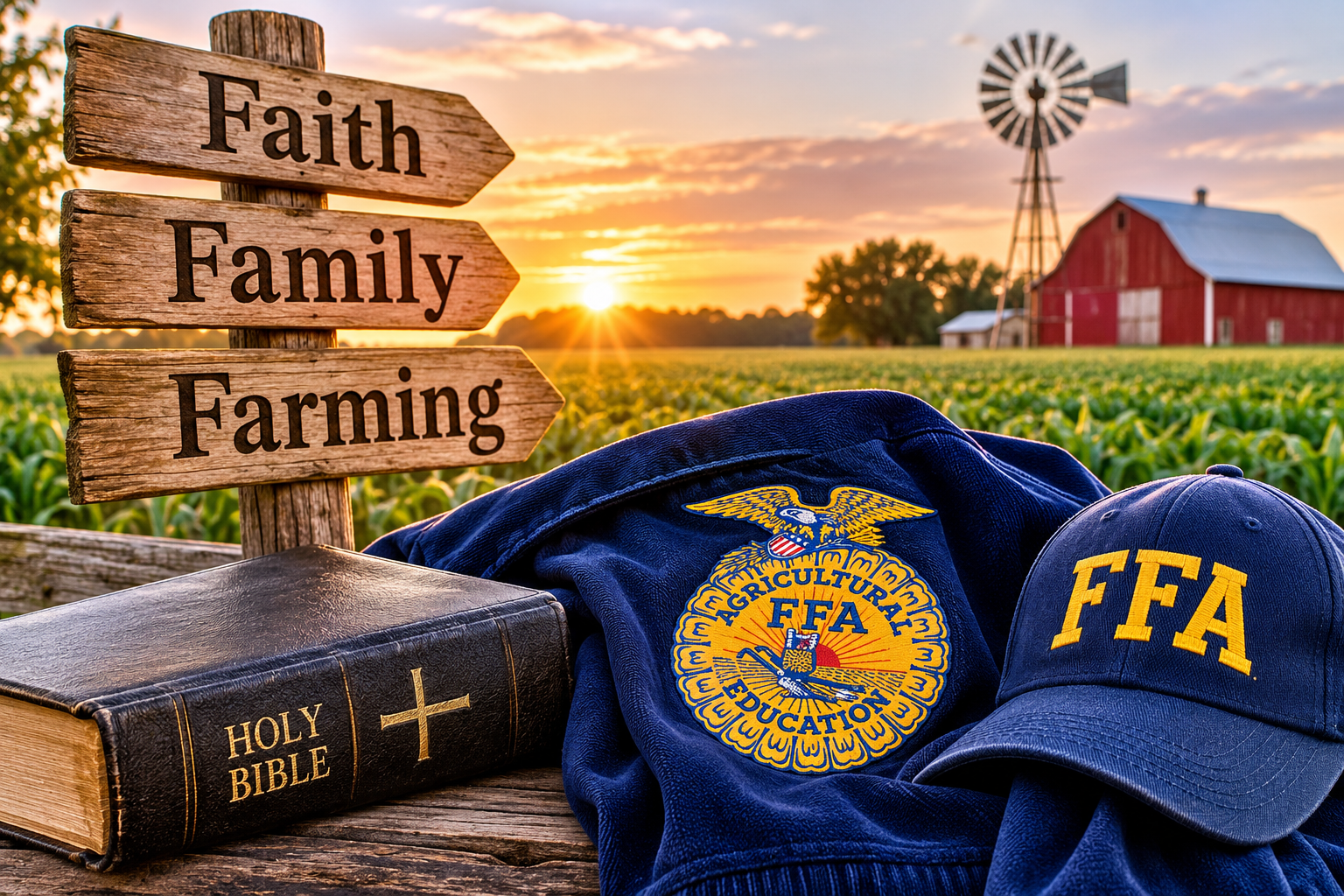
Today, FCFI continues to connect faith, family, and farming through fellowship, outreach, and volunteer service. Its programs include disaster relief, agricultural assistance, and opportunities for domestic and international mission work.
Janzen explained that FCFI also values opportunities to connect with FFA students, whom he described as talented young people preparing to make a meaningful impact on the world. Through convention booths and conversations with students, FCFI seeks to encourage them to put their Christian faith into action through service to others.
Changes in FCFI’s Participation at FFA Conventions
For approximately 25 years, FCFI participated in the national FFA convention. However, in 2018, the organization was informed that it would no longer be welcome as an exhibitor because it did not meet the convention’s diversity, equity, and inclusion (DEI) goals, according to Janzen.
Since then, FCFI has focused on participating in state-level FFA conventions, attending approximately 30 state conferences over the years to continue connecting with students.
More recently, FCFI attempted to apply again to exhibit at the national convention. According to Janzen, the application was denied under an exhibitor policy that prohibits religious organizations and religious expression.
Janzen questioned why an organization focused on voluntary conversations, community service, and disaster relief would be excluded because of its Christian identity. He also expressed concern about what he sees as inconsistencies in the application of the convention’s policies, noting that some organizations with religious affiliations have been permitted to participate.
Seeking a Resolution
After the national FFA denied FCFI’s application, Janzen submitted an appeal explaining the organization’s mission and the nature of its interactions with students. He emphasized that FCFI offers voluntary conversations and practical service opportunities rather than requiring students to participate in religious activities.
He also highlighted the organization’s work in disaster relief, including tornado debris cleanup, assistance for farmers with disabilities through its AgrAbility-related efforts, and short-term domestic and international mission opportunities.
According to Janzen, the appeal was denied, with the national organization maintaining its decision.
FCFI subsequently sought assistance from Liberty Counsel, which sent a demand letter challenging the exclusion and citing legal precedents related to access and religious expression.
Janzen said FCFI believes the organization’s activities should be permitted and that its faith-based identity should not automatically disqualify it from participating in convention events.
Concerns Beyond the National Convention
Janzen also described difficulties with participation at some state-level FFA conventions. He cited experiences in Texas, Ohio, Illinois, and Oregon, as well as concerns involving Idaho and Minnesota.
While the circumstances have varied by state, he expressed concern that restrictions on FCFI’s participation could become more widespread.
At this year’s national convention, FCFI representatives were unable to exhibit inside the event. Instead, they distributed informational flyers outside to explain their absence and help attendees understand the situation.
Janzen said he believes FCFI should not have to rely on distributing flyers outside convention venues to reach students who might benefit from learning about its service opportunities.
Encouraging Common Ground
Beyond seeking permission to exhibit, Janzen hopes the FFA will reconsider how it approaches diversity and inclusion.
He suggested that an approach emphasizing common ground, cooperation, and shared service could help people from different backgrounds work together without requiring them to set aside their beliefs.
Janzen also pointed to convention presentations in which several FFA officers spoke openly about their faith. He viewed these examples as evidence that faith remains meaningful to many members of the agricultural community.
For FCFI, the issue is not simply about securing an exhibitor space. It is about maintaining opportunities for students to learn how faith can motivate practical service, encourage compassion, and strengthen communities.
Continuing the Conversation
FCFI hopes to raise awareness of the restrictions and encourage a constructive resolution that allows faith-based organizations to participate in agricultural events while respecting applicable policies.
Janzen emphasized that FCFI’s work extends beyond convention booths. Through disaster response, assistance to farmers facing disabilities and other challenges, and volunteer mission opportunities, the organization continues to serve farming communities and encourage Christians to put their faith into action.
To learn more about FCFI’s mission, programs, and volunteer opportunities, visit fcfi.org.
The interview with Dan Janzen originally aired on Life and Faith Indiana, where host Scott Kump discussed the relationship between faith, family, and farming and the challenges FCFI has encountered in its efforts to participate in FFA conventions.