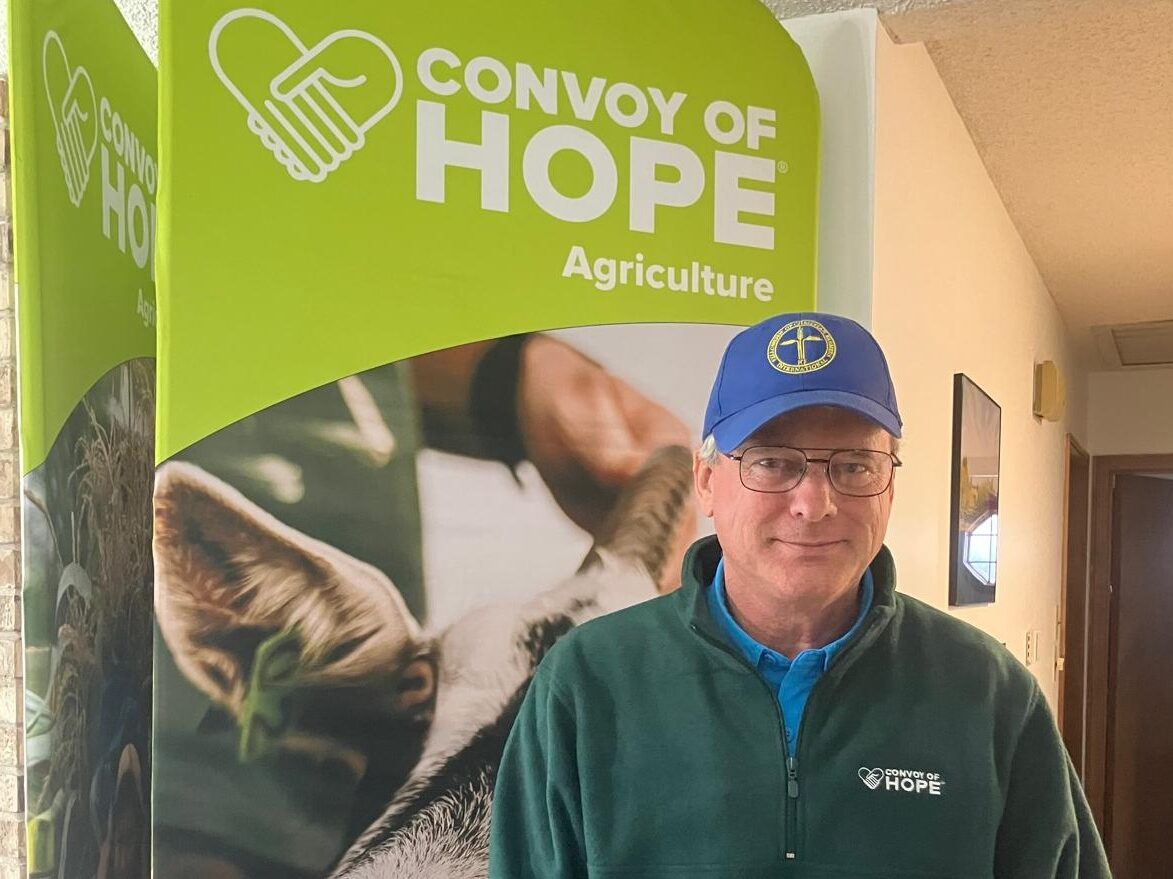
Preconference Visit to Convoy of Hope — Springfield, Missouri
FCFI Executive Director Dan Janzen
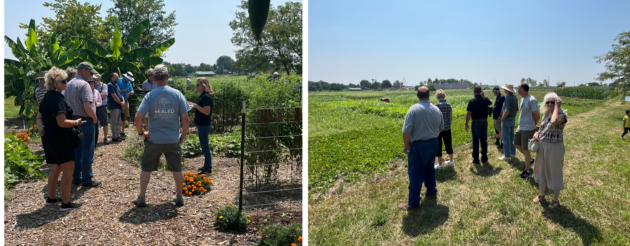
As part of our preconference events, we had the opportunity to visit Convoy of Hope’s Global Headquarters and Center for Agriculture & Food Security. We spent time touring the agricultural center, including its greenhouses, equipment, research plots, and other agricultural demonstrations.
The visit was particularly valuable for FCFI because there is considerable overlap between Convoy of Hope’s developing agricultural ministry and FCFI’s vision for using agriculture as a means of strengthening families, communities, and advancing the work of the Great Commission.
Convoy of Hope established its Center for Agriculture & Food Security (CAFS) to research, demonstrate, and teach agricultural practices that can be adapted to different regions of the world. The center is located on Convoy’s Springfield campus, where agricultural land is used for research, demonstration, training, and production. Convoy describes the purpose of the center as equipping farmers with agricultural education, tools, and resources so they can produce life-sustaining crops and develop greater independence and resilience.
Agriculture as a Tool for International Development
What particularly caught my attention during the visit was that the Springfield operation is not simply a demonstration farm. It is intended to serve as a testing and training center for agricultural practices that can ultimately be transferred to farmers around the world.
Convoy uses controlled demonstration plots to test different varieties and production techniques before recommending them to farmers in other countries. For example, Convoy has conducted experiments with corn and beans, intentionally varying growing conditions and practices so that farmers elsewhere do not have to learn through costly trial and error themselves.
This is very compatible with FCFI’s philosophy of maximizing blessing through excellence in stewarding already available (what people have at hand) local resources. Rather than simply providing an ongoing supply of donated food to vulnerable people, agricultural development can help people develop the knowledge, skills, tools, and productive resources necessary to provide food for their own families and create additional income.
The center also provides a place where agricultural specialists can work with universities, students, farmers, and international partners. Convoy reports that the center has hosted visitors from numerous countries to learn about agriculture and that its goal is to expand agricultural training and resources internationally.
Greenhouses and High Tunnels
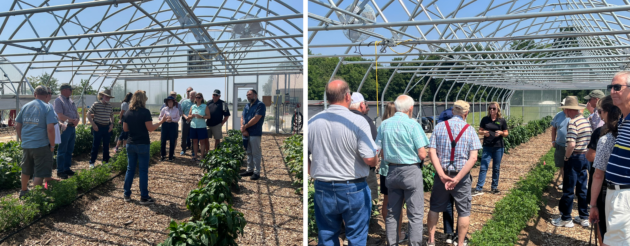
One of the most interesting aspects of the tour was seeing the greenhouses and high tunnels and the way they are being used as both production and research facilities.
Convoy uses these structures to demonstrate how relatively simple protected-culture systems can extend the growing season and protect crops from unfavorable weather such as high rainfall and wind events. Their high tunnels have been used to grow crops including cabbage, broccoli, kale, lettuce, spinach, tatsoi, carrots, and other vegetables. Convoy notes that in Missouri, high tunnels can provide approximately 10 months of growing opportunity.
This has obvious international applications. A technology that can extend the growing season, protect crops from excessive rainfall, or provide a more controlled environment may be particularly useful in areas where farmers face difficult climatic conditions.
Convoy specifically envisions adapting greenhouse environments to different parts of the world. Its agricultural-center plans describe greenhouse areas that could simulate different climates, allowing researchers and trainers to develop resources for regions ranging from warm and wet environments to hot and dry regions.
Research and Demonstration Plots
We also had the opportunity to walk through the various research and demonstration plots and see the experiments that are underway.
This is one of the most valuable aspects of the center. Instead of assuming that a particular agricultural technique will work everywhere, Convoy can test it under controlled conditions, observe the results, and then determine how the practice might be adapted to a particular country or agricultural environment.
Convoy has previously partnered with universities and other agricultural organizations in this type of research. One example involved research on corn and lablab, including questions about planting timing and competition between crops. The research began in a greenhouse environment and was subsequently tested in Tanzania, illustrating the way research can move from a controlled environment in Missouri into an international agricultural setting.
This type of research → demonstration → training → international application model is especially interesting to FCFI.
Equipment and Appropriate Technology
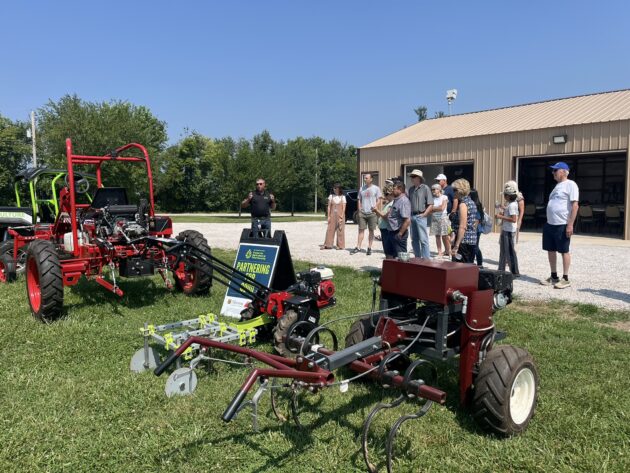
The agricultural center also has equipment and demonstrations designed to help explore farm mechanization and appropriate technology.
This is important because the best agricultural technology for an international farmer is not necessarily the most sophisticated or expensive technology available in the United States. The question is whether a particular tool, machine, production method, or system is appropriate for the farmer’s resources, environment, labor availability, markets, and local conditions.
Convoy’s agricultural program specifically includes research and demonstration in areas such as farm mechanization, livestock systems, crop production, and appropriate technology.
That approach fits well with FCFI’s emphasis on helping people expand and maximize the resources they already have, rather than creating dependency on outside resources.
Livestock and Integrated Agriculture
The center is also expanding its work beyond crops.
Convoy’s agricultural center maintains livestock—including goats and chickens—to demonstrate appropriate animal husbandry systems. Convoy explains that goats can provide both nutrition and an income opportunity through products such as milk, cheese, and butter. Chickens are similarly being used to demonstrate poultry production and the business or income centered aspects of raising animals.
This broader approach is important because sustainable agricultural development is rarely about a single crop. Farmers need systems that integrate crops, livestock, soil, water, labor, markets, storage, and processing.
Potential for FCFI and Convoy of Hope to Work Together
Our visit gave us a much better understanding of the potential for FCFI and Convoy of Hope to work together internationally.
Both organizations recognize that agriculture can be much more than simply producing food. Properly developed, agriculture can provide families with food, income, dignity, productive assets, and opportunities for the next generation.
For FCFI, this also provides an important bridge between agricultural development and Gospel ministry. Farmers are often more receptive to practical assistance when it addresses the challenges they face every day. Agricultural training can open relationships that provide opportunities for discipleship, church development, and sharing the Gospel.
Convoy’s international agricultural work could also complement FCFI’s growing network of agricultural missionaries, farmers, churches, and international partners. FCFI’s developing work in places such as Jamaica, Romania, Albania, Germany, Kenya, and the Philippines creates potential opportunities to identify where Convoy’s agricultural research, training, or resources could be useful.
A Potential Disaster-Relief Partnership
Another area of potential cooperation is disaster relief.
FCFI has experience responding to agricultural disasters and working directly with farmers whose land and livelihoods have been damaged. Convoy of Hope has extensive experience responding to disasters and mobilizing resources.
Rather than duplicating each other’s work, there may be opportunities for the two organizations to work together when disasters affect agricultural communities—Convoy bringing its disaster-response capacity and FCFI bringing agricultural knowledge, relationships with farmers, and the ability to minister directly within agricultural communities.
This could create a particularly effective combination of immediate relief, agricultural recovery, and long-term development.
My Impression from the Visit
The Springfield agricultural center gave us a tangible picture of what an international agricultural-development ministry can look like when it moves beyond simply distributing inputs.
The greenhouses, research plots, livestock facilities, equipment, and demonstrations are all tools for answering a larger question:
What agricultural practices and appropriate technology equipment can actually help families and communities become more productive and resilient in their particular environment?
That is a question FCFI is increasingly asking as we expand internationally.
Our visit, therefore, was more than simply a tour. It gave us an opportunity to see a functioning agricultural research, demonstration, and training model and to consider how FCFI might work alongside organizations such as Convoy of Hope to expand agricultural development opportunities while keeping the Great Commission and Gospel discipleship at the center of our work.