Truth, Stewardship, and Modern Agriculture: Learning to Discern Fact from Fear (A Preview of Calvin Beisner, FCFI Conference Keynote Speaker Website Articles on Ag)
Few topics in modern agriculture generate more controversy than glyphosate, genetically modified organisms (GMOs), and the safety of today’s food production systems. Headlines, lawsuits, social media campaigns, and activist groups often present alarming claims that can leave consumers, farmers, and Christians wondering what is true.
As believers, we are called to pursue truth, exercise discernment, and evaluate claims carefully. These principles are at the heart of the work of E. Calvin Beisner, founder of the Cornwall Alliance for the Stewardship of Creation and one of the keynote speakers at our upcoming conference.
A recurring theme in discussions about glyphosate and GMOs is the claim that they are responsible for a wide range of diseases, including cancer, autism, obesity, Alzheimer’s disease, infertility, and many others. While such claims often appear convincing at first glance, a closer examination reveals that many are built on correlations rather than proven cause-and-effect relationships.
One article on the Cornwall Alliance website, “Does Monsanto’s Roundup (Glyphosate) Cause Disease?” (click here to read the article https://cornwallalliance.org/does-monsantos-roundup-glyphosate-cause-disease/), examines claims that glyphosate, the active ingredient in Roundup herbicide, is responsible for numerous health problems. The article highlighted how some widely circulated studies relied heavily on statistical correlations and speculative theories rather than direct scientific evidence. Experts reviewing these claims pointed out that simply observing two trends increasing at the same time does not prove that one causes the other. Sound science requires rigorous testing, repeatable results, and careful evaluation of all available evidence.
The article further demonstrated how scientific-sounding language, impressive charts, and extensive references can sometimes create the appearance of credibility while lacking the substance necessary to support sweeping conclusions. This serves as an important reminder that Christians should not accept claims merely because they appear authoritative but should instead thoughtfully examine the evidence.
A second Cornwall Alliance article, “Fraud and Corruption Bring Big Payoffs,” (click here to read the article https://cornwallalliance.org/fraud-and-corruption-bring-big-payoffs/), explores the legal battles surrounding glyphosate and the lawsuits that have resulted in massive financial awards against Bayer-Monsanto. Despite court rulings and widespread media attention, the article noted that numerous scientific and regulatory organizations around the world—including government agencies and independent researchers—have concluded that glyphosate is unlikely to pose a cancer risk at the levels people normally encounter.
The article also raised concerns about how public fears, emotional arguments, and selective presentation of evidence can sometimes influence public opinion and legal outcomes. It emphasized the importance of evaluating scientific questions based on comprehensive research rather than headlines, fear-driven narratives, or financial incentives.
The third Cornwall Alliance article, “Answering Objections about Genetically Modified Organisms,” (click here to read the article https://cornwallalliance.org/answering-objections-about-genetically-modified-organisms/), addresses objections to genetically modified organisms. Opponents of GMO technology frequently argue that genetically modified foods are harmful to human health and the environment. However, decades of research and reviews by leading scientific organizations have found little evidence supporting these claims. Studies alleging severe health risks have often been shown to contain significant flaws or have failed to be replicated by subsequent research.
At the same time, the article acknowledged that all agricultural technologies involve tradeoffs. Farmers continually balance productivity, environmental stewardship, and economic realities. Genetic modification, when used responsibly, has helped reduce crop losses, improve yields, conserve soil and water resources, decrease the use of some pesticides, and contribute to a more abundant food supply for a growing global population.
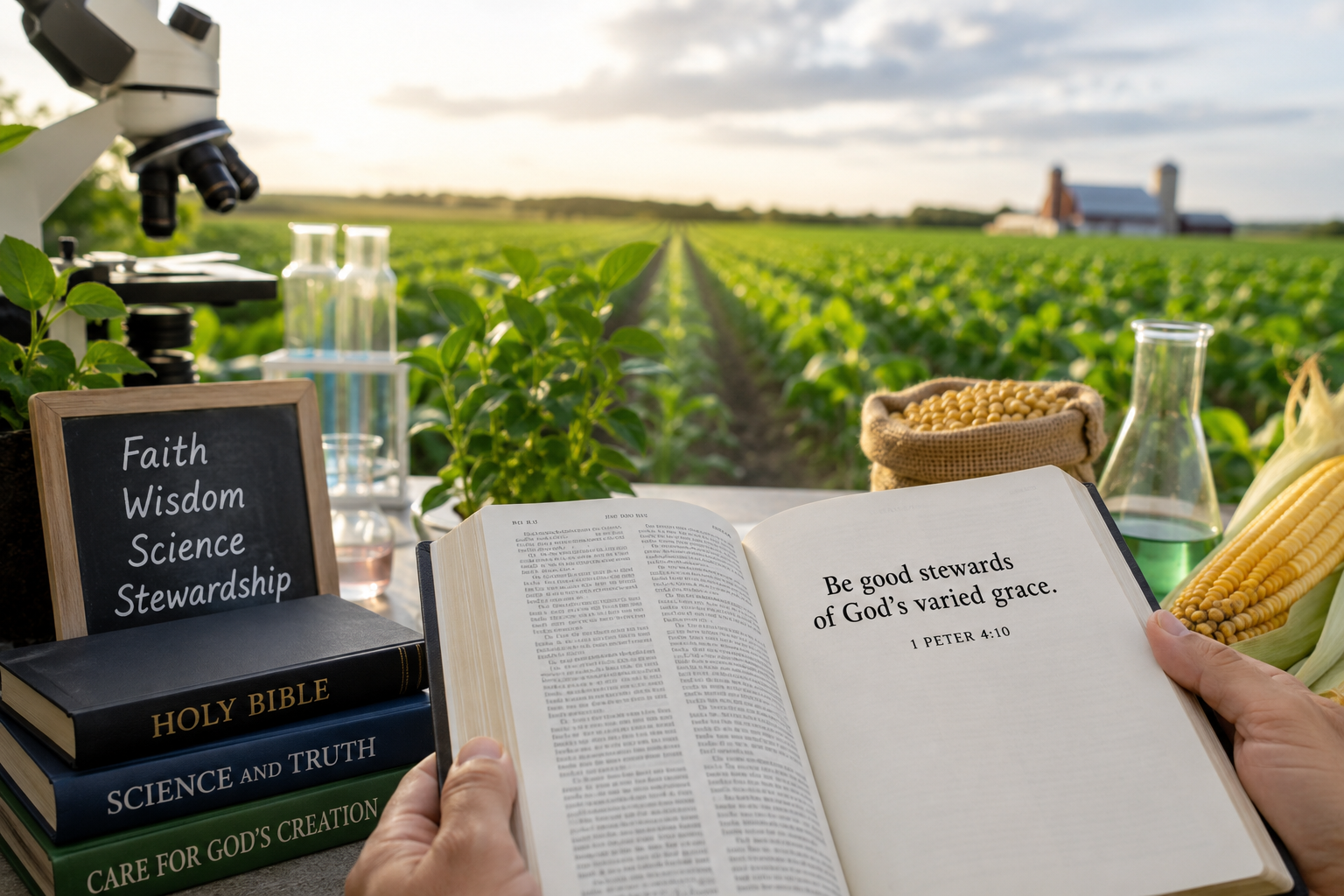
These discussions ultimately point to a larger issue: the need for wisdom and discernment when evaluating complex scientific and environmental questions. Scripture encourages believers to be good stewards of God’s creation while also seeking truth and rejecting falsehood. Whether the topic is agriculture, environmental policy, food production, or technological innovation, Christians should strive to base their conclusions on sound evidence, careful reasoning, and biblical principles.
This commitment to truth, stewardship, and responsible decision-making is a central theme in the ministry and teaching of E. Calvin Beisner. Through decades of research, writing, and public engagement, he has encouraged Christians to thoughtfully evaluate environmental and scientific issues while remaining faithful to biblical principles.
We are honored to welcome E. Calvin Beisner as one of our keynote speakers at the upcoming conference. His insights will help attendees better understand the intersection of faith, science, stewardship, and public policy while equipping them to engage today’s most important cultural and environmental conversations with confidence, wisdom, and grace.
Join us as we learn how biblical stewardship and sound science can work together to promote human flourishing, care for creation, and advance truth in a world increasingly shaped by competing voices and conflicting claims.