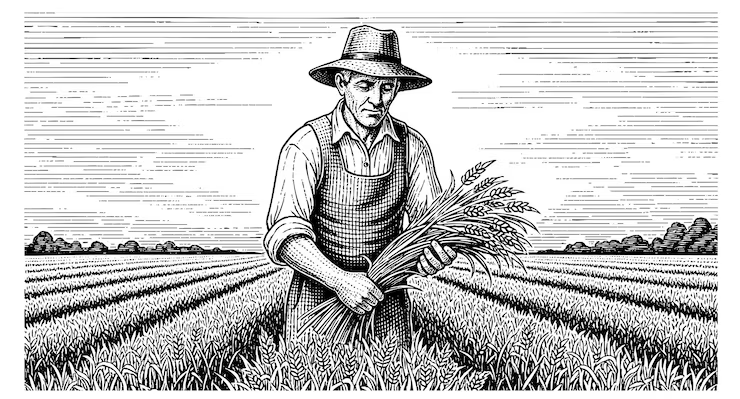
The Farming Stories Jesus Told – by Greg Roth
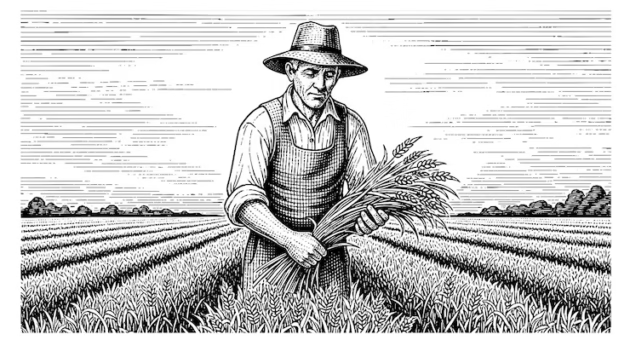
Jesus often taught profound spiritual truths through simple stories drawn from everyday life. For the farmers, laborers, and rural communities who made up much of His audience, these illustrations were both familiar and memorable. In his book The Farming Stories Jesus Told, Greg Roth explores the agricultural background behind many of Christ’s parables, helping modern readers understand them as His original listeners would have.
Today, most people are several generations removed from farming. As a result, details that would have been obvious to Jesus’ audience can easily be overlooked. Roth demonstrates that by understanding the realities of agriculture in biblical times, the meaning of many parables becomes clearer and more powerful.
Lessons from the Fields
The Sower
In the Parable of the Sower, Jesus describes seed falling on different types of soil. Roth explains that farmers in Jesus’ day often scattered seed before plowing, and varying soil conditions could be found within a small area. The focus of the story is not the skill of the sower, but the condition of the soil. Likewise, the effectiveness of God’s Word depends on the receptiveness of the human heart.
Wheat and Weeds
The Parable of the Wheat and the Weeds teaches an important lesson about patience. Farmers could not always remove weeds early in the growing season without damaging the crop itself. Jesus used this reality to illustrate God’s wisdom in delaying final judgment until the proper time. He desires that all may come to repentance and so he demonstrates patience giving us a chance to do the work of the Great Commission. We at Fellowship of Christian Farmers send workers out to do this Great Commission harvest. The “fields are white unto harvest”.
The Mustard Seed
Though one of the smallest seeds planted by farmers, the mustard seed grows into a surprisingly large plant. Jesus used this image to show how God’s kingdom often begins in seemingly insignificant ways but grows beyond what anyone might expect.
The Growing Seed
Farmers plant seed, but they cannot fully explain the mysterious processes that produce life and growth. In the same way, God’s kingdom advances through His power and purpose, even when people cannot see or understand everything He is doing.
Vineyards and Harvests
Many of Jesus’ teachings involving vineyards and harvests emphasize stewardship, accountability, and fruitfulness. God entrusts resources, opportunities, and responsibilities to His people with the expectation that they will produce spiritual fruit that honors Him.
Timeless Themes from Jesus’ Agricultural Parables
Throughout these farming stories, several important themes consistently emerge:
- Kingdom growth is often gradual rather than instant.
- God works through ordinary people and ordinary circumstances.
- Fruitfulness is expected from faithful stewardship.
- Stewardship is a foundational biblical principle.
- Faith requires patience as believers wait for God’s timing.
- The natural world provides powerful illustrations of spiritual truths.
Why These Parables Matter Today
One of the most valuable insights from Roth’s book is how frequently Jesus connected spiritual lessons with the principles of productive agriculture. His stories repeatedly highlight stewardship, investment, multiplication, patience, harvest, fruitfulness, and accountability.
The parables remind us that God’s desire is not merely for His people to preserve what they have been given, but to use it faithfully and productively for His purposes. Just as farmers expect a harvest from wisely managed fields, God desires spiritual fruit from lives that are surrendered to Him.
For those involved in agriculture, rural ministry, or organizations serving farming communities, these insights provide a powerful bridge between everyday work and biblical discipleship. Roth’s book serves as an excellent resource for teaching, preaching, and personal reflection, helping readers reconnect with the agricultural context that shaped so much of Jesus’ teaching.
By seeing the fields, vineyards, seeds, and harvests through the eyes of Christ’s first listeners, we gain a deeper appreciation for the wisdom and timeless relevance of the farming stories Jesus told.