The Pastor’s Piece – Pastor Kevin Cernek, FCFI Chaplain
FCFI
April 12, 2026
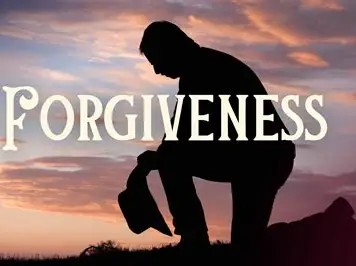
Today’s column is on a subject that many people struggle with. It’s about forgiveness. There are two aspects of forgiveness: God’s forgiveness and our ability to forgive others for wrongs suffered. It’s a touchy subject. I’ll start by saying what forgiveness is not: Forgiveness is not about what we feel, it’s about what God has done. Many struggle to feel forgiven, but Scripture teaches us to know we are forgiven based on God’s truth. It’s not about feeling – it’s about knowing. (How can we know? Well, keep reading). Until we know that forgiveness has actually taken place, we continue to pay over and over again for what we have done. This is especially true in our relationship with God. Psalms 32:1-2 says: “Blessed is the one whose transgressions are forgiven, whose sins are covered. Blessed is the one whose sin the Lord does not count against him and in whose spirit is no deceit.”
What does God do with the sin of His redeemed? He makes it go away. “Let the wicked forsake his way and God will have mercy and abundantly pardon,” (Isaiah 55:7) God forgives sin of every kind – against Himself or others, great or small, known or unknown. Forgiveness means taking sin and sending it away. When we confess, God removes it. Ephesians 1:7 proclaims: “In Him we have redemption through His blood.” The issue is not the nature of the sin, the issue is the nature of God. He is a forgiving God.
God’s forgiveness is free to us, but it was not free to Him. The cost was great. He gave His Son, Jesus Christ, to be nailed to the cross. Everything we have done that deserves punishment was placed on Him when He was on that cross. That’s why God can forgive us completely: “I am He who blots out your transgressions and remembers your sins no more,” (Isaiah 43:25). Forgiveness is not partial. It is a commitment from God that you are pardoned. How do we receive this pardon? There is one condition with three parts: confess, turn, and believe. “If we confess our sins, He is faithful and just to forgive us and to cleanse us from all unrighteousness,” (1 John 1:9). In Mark 1:15 Jesus said: “Repent and believe in the gospel.” Repent means to turn. God already knows your sin, but you must turn away from it and turn to Jesus and trust Him to save you. We love God and hate sin.
Once you’re forgiven, the enemy will try to make you question whether you’re really forgiven. When that happens, go back to Scripture, just like Jesus did. Stand on what God has said, not on what you feel. In the Bible, God gives us clear images so we can know what forgiveness means. He separates our sin from us “As far as east is from west,” Psalm 103:11. Micah 7:19 says they are “Buried in the depths of the sea.” Isaiah 38:17 & 22 says they are: “Cast behind His back … blotted out like a cloud.” And Hebrews 8:12 says they are: “Remembered no more.” Forgiveness means God chooses not to hold your sin against you.
Now, what about us forgiving others? Well, this same truth doesn’t stop with us, it actually flows through us. If God has taken my sin and sent it away, then I am called to do the same for others. In Matthew 6:14 Jesus said if you don’t forgive others, your Father in heaven will not forgive you. That’s a strong statement. Forgiveness is not about feeling, it’s about knowing and choosing. It is choosing to release the debt – I will not hold this against them; I will not make them pay me back; I will not keep bringing it up to use against them; I will trust God with justice. I choose to put their offense as far away as east is from west (the two never meet). I choose not to dig it back up. I choose not to replay it as their identity. I choose not to keep a record of it. I choose not to use it against them again.
This doesn’t mean it didn’t hurt. It doesn’t mean trust is easily restored. It means I am free from carrying the debt. It means that because God has forgiven me completely, I choose to forgive and leave the justice part up to God. I choose to release this person from the debt they owe me. I will not hold it against them, even when the hurt feelings return. I trust God with justice and choose freedom over bitterness. Ephesians 4:22 says: “Forgive one another, as God in Christ forgave you.” Because we are completely forgiven in Christ, we choose to forgive others the same way, releasing the debt and trusting God, so we can live in freedom instead of guilt or bitterness.
(Kevin Cernek is Lead Pastor of Martintown Community Church in Martintown, Wisconsin)