The Pastor’s Piece – Pastor Kevin Cernek, FCFI Chaplain
April 5, 2026
In John, chapter 11, we are introduced to two sisters, Mary and Martha and their brother Lazarus. All three of them were good friends with Jesus. You likely remember the story of how Lazarus died and when Jesus heard about it, he stayed a couple days longer where he was and by the time he arrived, Lazarus had already been in the tomb for four days, (John 11:17).
When Jesus was on the outskirts of town, Martha heard that He was coming and went out to meet Him. Martha said, “Lord, if you had been here, my brother would not have died. But even now I know that whatever you ask from God, God will give you.” Jesus replied, “Your brother will rise again.” Martha answered, “I know that he will rise again in the resurrection on the last day.” Then Jesus said to her: “I am the resurrection and the life. Whoever believes in me, though he die, yet shall he live, and everyone who lives and believes in me shall never die. Do you believe this?” Martha responded, “Yes, Lord; I believe that you are the Christ, the Son of God, who is coming into the world.”
When we meet someone, we typically identify ourselves by saying: “I am …” (and then fill in the blank). For instance: “I am Kevin. I’m a husband, pastor, dad, grandpa, uncle, and great uncle.” Simply saying “I am” isn’t enough. It begs the question: “You are what?” But when Jesus said, “I am,” it was different. That statement alone carried enormous weight in His day. It echoed the way God revealed Himself in the Old Testament and Jesus did sometimes complete the phrase: “I am the bread of life,” “I am the light of the world,” “I am the good shepherd,” “I am the way, the truth, and the life,” and “I am the true vine.”
Still, even beyond these, Jesus made other declarations: “Unless you believe that I am He, you will die in your sins,” (John 8:24); “When you have lifted up the Son of Man, then you will know that I am He,” (John 8:28); and most dramatically, “Before Abraham was, I am,” (John 8:58). This language reaches back to God’s self-revelation in the Old Testament, where the Lord repeatedly declares, “I am He,” identifying Himself as the eternal, self-existent One. There is no escaping the conclusion: Jesus is claiming divine identity. He is not merely a teacher or prophet; He is God in the flesh. So, when Jesus says in John 11, “I am the resurrection and the life,” He is not offering a vague spiritual idea. He is making a bold, personal claim about who He is.
Notice also, what Jesus does not say. He does not say, “There is a resurrection,” or “There is life.” Instead, He says, “I am the resurrection and the life.” When Jesus tells Martha, “Your brother will rise again,” she assumes He is speaking about the general resurrection at the end of time, a belief commonly held among faithful Jews. Her response shows solid theology, but it remains abstract and future-oriented. Jesus gently redirects her. In effect, He says, “Martha, resurrection is not just an event on the last day. It is standing right in front of you. I am the resurrection and the life.” He then adds, “Whoever believes in me, though he die, yet shall he live.” The focus is not on belief in a doctrine, but on trust in a person. Eternal life is not found in an idea or a future hope alone, but in Jesus Himself. The point is clear: there is no resurrection or eternal life apart from Him. He does not merely give life; He is life. He does not merely bring resurrection; He is the resurrection. The hope Martha held in theory now stands before her in reality. The same is true for us. Faith is not ultimately about affirming a principle, but about trusting a Person. There will be a resurrection because there is a living Savior who has authority over death.
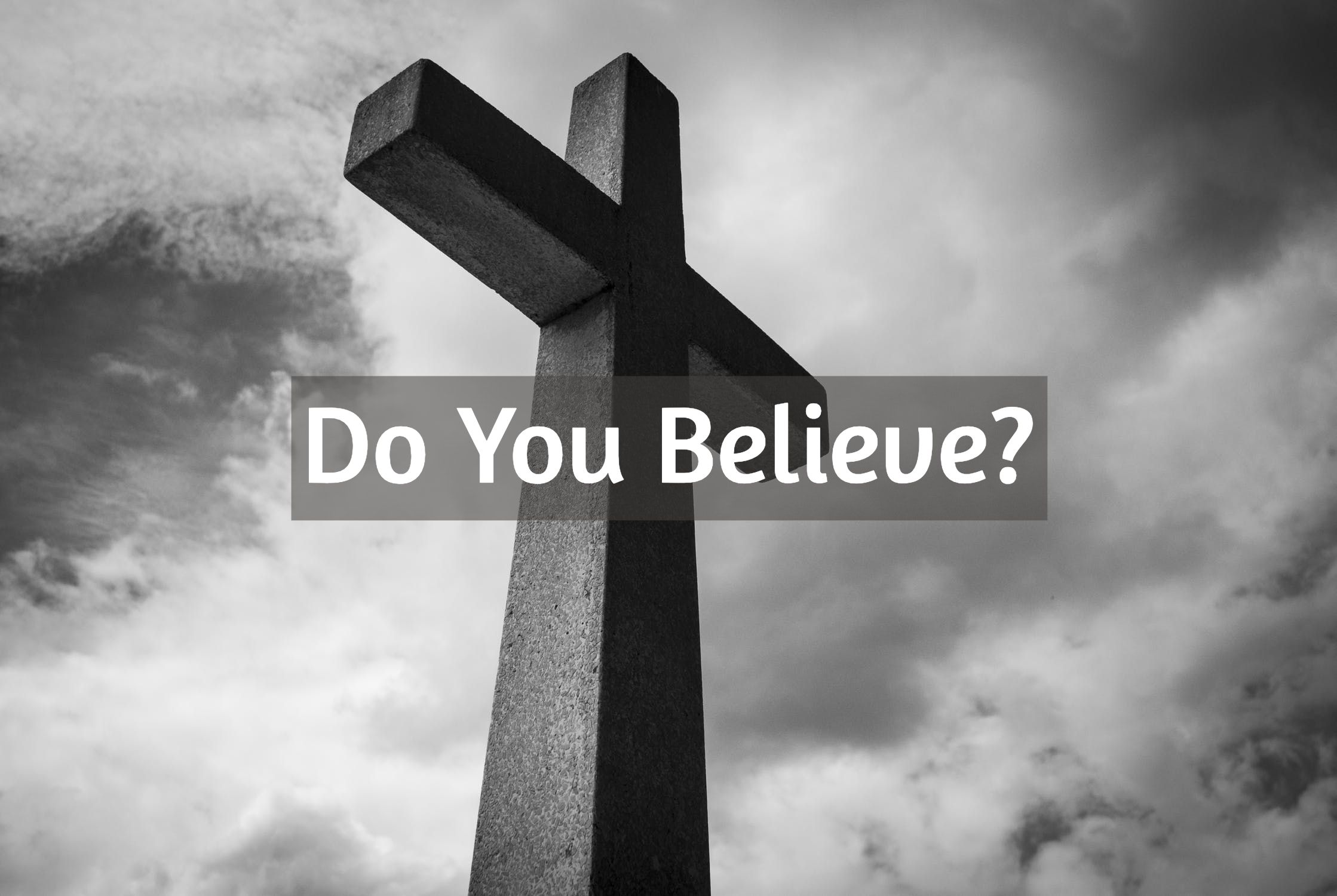
Finally, consider that Jesus makes this deeply personal. He asks Martha, “Do you believe this?” He directs the question straight to her and by extension, He asks the same of every one of us. He is not simply asking whether Martha believes Lazarus will be raised, or even whether she believes in a future resurrection. He is asking whether she trusts Him, whether she believes that He Himself is the resurrection and the life.
Martha’s answer is clear and confident: “Yes, Lord; I believe that you are the Christ, the Son of God.” Her faith is not in an abstract hope, but in Jesus Himself. It is important to understand that the truth of resurrection does not depend on our belief. Whether someone believes it or not does not change reality. There will be a resurrection for all, some to life, and some to judgment, (John 5:25–29). Belief does not create truth, nor does disbelief destroy it. Belief determines how each person stands in relation to that truth.
So the question remains, just as Jesus asked it then: Do you believe this? Not in a general sense, not as a distant theological idea, but personally. Do you believe that Jesus is the resurrection and the life? Do you trust Him as the One who conquers death and gives eternal life? That is the question placed before Martha. It is the same question placed before us. And it is the only one that finally matters.
(Kevin Cernek is Lead Pastor of Martintown Community Church in Martintown, Wisconsin)